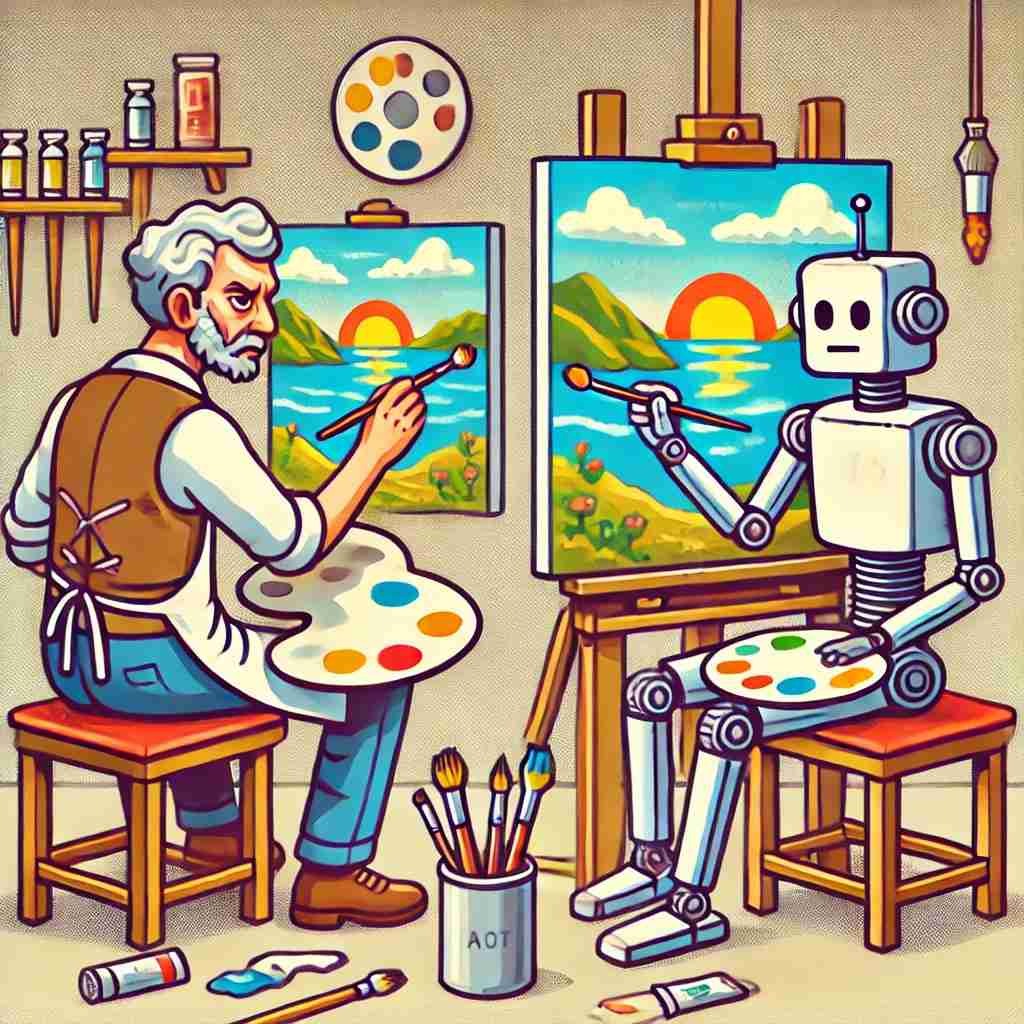

Generative AI systems have reached a scale that few predicted even five years ago. What began as experimental language models has become a global engine for summarization, code generation, reasoning, content creation, and decision-making. But this acceleration has also collided head-on with a world built on copyright rules designed for newspapers, books, recordings, and film. The question that now dominates lawsuits, legislation, and heated debate is simple to state and incredibly hard to answer: when an AI model trains on copyrighted material, is that innovation or infringement?
The unprecedented training requirements of large AI models have pushed companies to ingest enormous volumes of online content. For years, this happened with relatively little public scrutiny. Publishers were focused on their traditional rivals, not on algorithmic models consuming their archives. Today, that lack of early oversight has turned into one of the largest legal and economic questions of our era. The outcome will define how companies build AI, how creators are compensated, and who ultimately controls the next generation of intelligence infrastructure.
Big Media Meets Big AI
Recent lawsuits against AI companies illustrate just how quickly the tone has shifted from curiosity to conflict. The New York Times accusing an AI company of using protected journalism for model training is not merely a complaint about copying. It signals a broader anxiety: if AI systems can digest decades of reporting, and then generate coherent summaries or answer questions directly, what happens to media organizations whose business model depends on people reading their articles?
At the same time, AI firms argue that training on publicly accessible content is essential to building useful models. Without large-scale data, language models simply cannot function. And if every snippet of text required explicit permission, AI development could become impossibly expensive, slow, and dominated by only the wealthiest companies. That tension sets the stage for a legal struggle with no easy answers.
Europe Steps In
The European Union, which has a track record of aggressive tech regulation, has initiated investigations into whether large AI developers have violated copyright and competition rules. The question is not just whether training on copyrighted work is legal, but whether doing so gives AI companies an unfair competitive advantage. Europe’s approach, like GDPR before it, is likely to influence global standards. For AI companies, this introduces the possibility that model training in one jurisdiction could become regulated in fundamentally different ways from another, potentially forcing separate models for different markets.
However, Europe’s regulatory ambition faces a practical challenge: even if using copyrighted content without permission is deemed illegal, what mechanism will determine which content was used and to what extent it influenced a model? Unlike a pirated MP3 file, a transformer model does not store a direct copy of any specific document. It stores learned representations across billions of parameters. That distinction complicates enforcement, even if lawmakers decide that infringement occurred.
Napster All Over Again?
This is not the first time digital technology has outpaced legal frameworks. At the start of the 2000s, Napster allowed millions of users to share music files freely. The music industry argued this was theft. Napster claimed it was just enabling access to content users already possessed. Lawsuits eventually shut Napster down, but that did not kill digital music. Instead, it forced the creation of streaming platforms, licensing agreements, and entirely new business models that replaced traditional record sales.
The analogy is more than convenient rhetoric. Both moments involve disruptive technologies consuming copyrighted material at scale. Both revealed legal frameworks unable to adapt quickly enough. And both triggered a wave of lawsuits that ultimately led to new commercial structures. The critical difference is that Napster dealt with direct copies, whereas AI models generate new outputs rather than distributing identical files. But the underlying lesson remains: disruption often precedes a period of legal friction, and the winners tend to be the platforms that emerge after the dust settles.

In the Napster era, tools like Winamp symbolized the shift from physical media to unrestricted digital access.
The Fair Use Debate
At the heart of the legal dispute is the principle of fair use. Traditionally, fair use has allowed limited use of copyrighted material for purposes such as education, research, commentary, or transformation. But the concept was never written with machine learning in mind. What does “transformative use” mean when a model learns patterns rather than reproducing text? Is training fundamentally different from copying? Or is training effectively a high-scale extraction of copyrighted value without compensation?
The legal system now faces the challenge of applying outdated definitions to unprecedented technological behavior. Courts must determine whether training constitutes a new form of transformation, similar to how search engines crawl and index websites, or whether it is more akin to silently republishing content without permission.
The Business Risk for Publishers
If AI systems can answer questions directly, people might stop visiting the websites where original content lives. News organizations already face shrinking traffic and advertising revenue. If generative AI tools become the primary interface for accessing information, publishers could lose visibility, revenue, and public relevance. In that sense, the fear is not just copyright violation but economic displacement. The industry that produced the raw material for training might be replaced by the models that learned from it.
The Business Risk for AI Companies
Ironically, AI companies face their own existential threat. If courts decide that training on copyrighted material is illegal without explicit permission, only companies with enormous resources could afford licenses. Smaller players could be locked out entirely. In the Napster era, the unintended consequence of lawsuits was a shift from thousands of independent distribution channels to a few dominant platforms. Something similar could happen in AI.
Attempts at Control
Several mechanisms are emerging to regulate or control training data. Some publishers are negotiating licensing agreements. Others are experimenting with watermarking or digital signatures to detect unauthorized use. Proposals exist for standardized dataset registries or content-based opt-out systems. But all of these approaches struggle against the sheer scale and opacity of modern AI pipelines. Detecting exactly which text influenced a particular model outcome remains technically complicated.
Enforcement Challenges
Even if laws restrict training, enforcement may be nearly impossible. What happens to models already trained on copyrighted material? Would they need to be retrained from scratch? How would anyone prove the origin of a specific capability or piece of generated text? The opacity of neural networks becomes not just a technical detail but a legal obstacle. Courts could rule against specific practices while being unable to mandate practical remediation. The result would be a legal precedent without a clear enforcement path.
The Future Could Look Like Streaming
The most likely long-term outcome is a licensing ecosystem similar to digital music. Large publishers might license archives to AI companies in exchange for compensation. Smaller publishers might be aggregated into large rights-management platforms. A handful of companies could control the majority of training data through negotiated agreements. Just as Spotify and Apple Music reshaped music distribution, a handful of AI data platforms might reshape knowledge distribution.
For AI, this could create a world where legal training is possible only through closed systems, pushing the field toward consolidation. Open source development would face enormous barriers. Innovation could slow or shift to jurisdictions with more permissive regulatory models.
The Open Internet at Risk
If the Napster analogy holds, we might soon ask whether the open internet becomes the private property of AI platforms. When training data becomes a commodity controlled by large players, the web’s foundational openness could erode. Instead of universal access, we might see private datasets, proprietary training pipelines, and unequal access to the raw material of intelligence. The open web, which once fueled innovation and democratized publishing, could become the resource that only giants can afford to mine legally.
The Stakes Could Not Be Higher
We are not merely deciding how to compensate publishers. We are determining who will control the infrastructure of knowledge that AI depends on. The next two years will be decisive. Courts and regulators are shaping rules that will determine whether AI evolves into an open ecosystem or a highly centralized industry.
How Zarego Can Help
At Zarego, we help organizations navigate the practical realities of AI adoption, including the emerging legal landscape around data usage, copyright, and responsible deployment. Whether you are exploring generative AI, building internal tools, or considering data-driven automation, we combine deep technical expertise with an understanding of evolving risks and regulations. If you want to build with confidence in this shifting environment, let’s talk.
